Contents
- 1 Coach Hiller Vertical Jump Q&A
- 1.1 Q: Give us a quick overview of who you are and what you do.
- 1.2 Q: What’s the biggest mistake people make when training their vertical jump?
- 1.3 Q: What are the top 3 exercises for increasing your vertical jump?
- 1.4 Nutrition
- 1.5 Stretching
- 1.6 Q: If you had to give just one tip for people to increase their vertical jump, what would it be?
- 1.7 Q: If someone does weight training and has a lot of muscle mass, will it increase or decrease his vertical leap?
- 1.8 Q: Last tip for helping people boost their vertical? What to focus on, what to avoid?
Hey guys, I haven’t updated my blog in a long, and it’s time for me to give you something.
This is an interview I had with Jacob Hiller, the author of the Jump Manual program.
In this interview, Jacob specifies several critical principles for improving your vertical jump and gives some gold nugget advice on how to do it.
So listen carefully and take notes.
Here it is.
Coach Hiller Vertical Jump Q&A
Q: Give us a quick overview of who you are and what you do.
My name is Jacob Hiller… I help people jump higher, run faster, and basically be more athletic.
Most people know me for my book, The Jump Manual.
I work mostly with basketball players, but I’ve also worked with athletes in other sports as well.
Long before I created The Jump Manual, I was working with different players and athletes around the world.
Previously, I was a professional basketball player. I still keep my vertical leap above 40 inches, and I’m just obsessed with getting people as explosive as possible.
My background is that I tried everything when I was a kid and it didn’t work in time.
At high-school, I’ve done basically every program on the planet… on my second year in college I actually figured out how to do it and got my vertical to 44 inches.
So I kept training, and I eventually played pro basketball in Mexico and ended up writing a book about how to do it.
The book took off and, as you can see, we had a lot of success with The Jump Manual.
Q: What’s the biggest mistake people make when training their vertical jump?
I think it’s the training protocols that they use.
For example, a lot of training protocols like the previously most popular program on the market, Air Alert, would tell people to do repetitions of up to a 100, 500 and even 1000 reps.
When you’re doing thousands of repetitions like that, you’re training your aerobic endurance; you’re not training yourself to be explosive.

If you want to be explosive, you have to do very low reps at a very high intensity.
I recommend that you limit yourself to 8 reps and keep everything as explosive as possible.
Think of it this way…
A sprinter would not train his sprinting speed by running a marathon.
For the same reason, a jumper should not jump thousands of times for a long period of time, otherwise he will just teach his body to jump low over a long period of time.
Because of this, you need to design your workouts so that every time you jump, you reach your maximum explosive levels.
Every repetition matters. Quality is what counts here, not quantity.
Training the right muscles is very important too, but as I stated earlier, the biggest mistake is training for endurance.
Q: What are the top 3 exercises for increasing your vertical jump?
You have to understand that jumping higher is mostly about 3 things.
First and foremost, you have to have enough strength, or else your body perceives you as heavy.
If you’re not strong, your body feels heavy, and you’re not light on your feet.
Second of all, once you get strong, you need to become quick.
There are many strong guys out there who can’t move their muscles quickly.
You want to be both strong and quick.
When you’re strong AND quick, THEN you’re explosive.
Thirdly, you’ve got to have a technique and coordination.
You want to be strong and quick, but strength and quickness are going to be applied to a specific movement.
If you’re not able to apply the strength and explosiveness to the specific movement, it’s not going to do you any good.

If your body is uncoordinated, you could have all the strength and quickness necessary, but you won’t be able to apply it to a specific movement.
1. The Joint Specific Squat
For strength training, I have a particular exercise called the Joint Specific Squat, in which you squat at the same angle that you would jump with.
There are many different types of squats, but not all of them are suitable for jumping higher. Therefore, I would say squat is the top exercise, but not just any squat, because some types of squats are useless.
2. Jump Squat
At #2 I would put jump squats.
This exercise is when you’re actually getting off the ground, you land perfectly, and you jump back up into the air.
3. Plyometrics
#3 would be a plyometric exercise tied to the sports specific movement.
With these three exercises, you’re covering a lot of ground.
Once you’ve mastered these exercises and moves, you can continue to advance.
Also, your training economy, or how much time you have available to train each week, will allow you to do all of the exercises.
My approach as a vertical jump trainer is this:
Learn all you can do and do it all.
Nutrition

Nutrition is super important for increasing your vertical jump, it can be a make-or-break thing.
Perfect nutrition won’t get you a vertical, but it will support everything you do, or otherwise undermine it.
To jump higher, you must have good nutrition. It will help your muscles grow faster and it will help your nervous system react more quickly.
Thus, you have to have a solid foundation of a healthy diet.
Because I firmly believe that “you are what you eat“, I have a whole section in The Jump Manual dedicated solely to the topic of nutrition.
Stretching
Stretching is another important thing for a lot of reasons.
But first thing’s first, it’s really good for your ligaments, and it’s good for your joints, tendons, and muscles.
By stretching your muscles, you’re teaching your body to go through a full range of motion.
You’re getting better muscular quality, your blood flow is improved, and you’ll be less likely to get injured.
Overall, you need to know that stretching helps you have a better tissue quality.
And, like I said before, stretching is very important, especially for injury prevention.
And while stretching alone is not going to get you a 40 inch vertical, it will support you on your way up.

Q: If you had to give just one tip for people to increase their vertical jump, what would it be?
I would say this:
- Get strong
- Get quick
- Get coordinated
Yeah, I know… that’s 3 tips, but a lot of people get focused on “I’m gonna become super flexible”, or “I’m gonna do these splits”, or “I’m gonna do just squats”…
I’d say screw all that.
Get strong in the right joint angles, do plyometrics for those same joint angles, and get your technique proper.
It sounds oversimplified, but the key takeaway from this is – do the big things, don’t just focus on the minutia stuff like getting strong on your toes or other BS tips floating on the internet.
Q: If someone does weight training and has a lot of muscle mass, will it increase or decrease his vertical leap?
If you’ll train properly, you’ll build functional muscle mass.
For every pound of muscle you put on, you’re that much stronger. The extra weight from the muscles is actually giving you more horsepower.
For example, if you had a car with a 6-cylinder engine, and I gave you an 8-cylinder engine – you now have two more cylinders.
Although those cylinders increase the weight of your car, they also give your more power by increasing the output of your car.
However, if you train improperly, you will only gain nonfunctional muscle mass, which will slow you down.
There’s also a limit to how much muscle you can gain before you start to become too heavy.
Once you reach that point, you will no longer benefit from the extra muscle, and it will actually do you more harm than good.
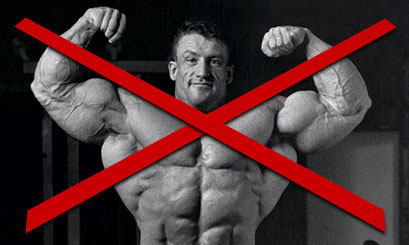
You see… too much muscle is not good for vertical jumping, which is why you don’t see bodybuilders with a 50 inch vertical.
Q: Last tip for helping people boost their vertical? What to focus on, what to avoid?
Avoid extremely high repetitions, training to fatigue, or focusing too much on just diet/supplements.
Remember to focus on the big rocks, move the big things – if you’ll get that going, you’ll see a lot better results.
For more information on Jacob Hiller and his Jump Manual, see his official website.
Last Updated on by Matthew Godley
More from my site
 Bounce Kit Review: Is Jordan Kilganon’s Jump Program Worth the $77?
- The Top 5 Vertical Jump Programs for Jumping Higher in 2026
- Vert Shock Program Review – WARNING! Beware The Results!
- The Jump Manual Review: Does The Program Really Work? Here’s My Results!
- 3 Aspects Needed For Effective Vertical Leap Training